Francesco Maggio: For me, Musa Mirzayev was a true master - INTERVIEW
Baku, October 21, AZERTAC
AZERTAC continues its conversation with Italian composer, musician, and cultural figure Francesco Maggio, who actively promotes Azerbaijani music, mugham, and Azerbaijani national motifs in Europe. He has composed musical works inspired by Azerbaijani culture, performed in Baku on numerous occasions, and organized joint concerts featuring Azerbaijani and Italian musicians, including in Germany.
In this interview, Maggio discusses the Azerbaijani composers with whom he feels a particularly deep artistic connection.
– Francesco, let us talk about classical Azerbaijani music. Which composer interests you the most?
– There are two figures with whom I feel a particularly deep connection, albeit for different reasons: Uzeyir Hajibeyli and Musa Mirzayev.
Uzeyir Hajibeyli strikes me as one of the most prominent figures in the history of Azerbaijani music. I feel especially close to his compositional poetics, particularly his lyricism, melodic elegance, and ability to transform musical expression into a deeply human language.
There is something in his music that feels surprisingly Italian to me. Naturally, this is not a matter of superficial stylistic resemblance, but rather of a shared artistic sensibility: the central role of song, the power of melody, theatrical expressiveness, and the unique ability to convey through music what words cannot express.
I think, for instance, of the opera Leyli and Majnun, a work that demonstrates how the mugham tradition and the language of Western opera can converge to create something artistically new.
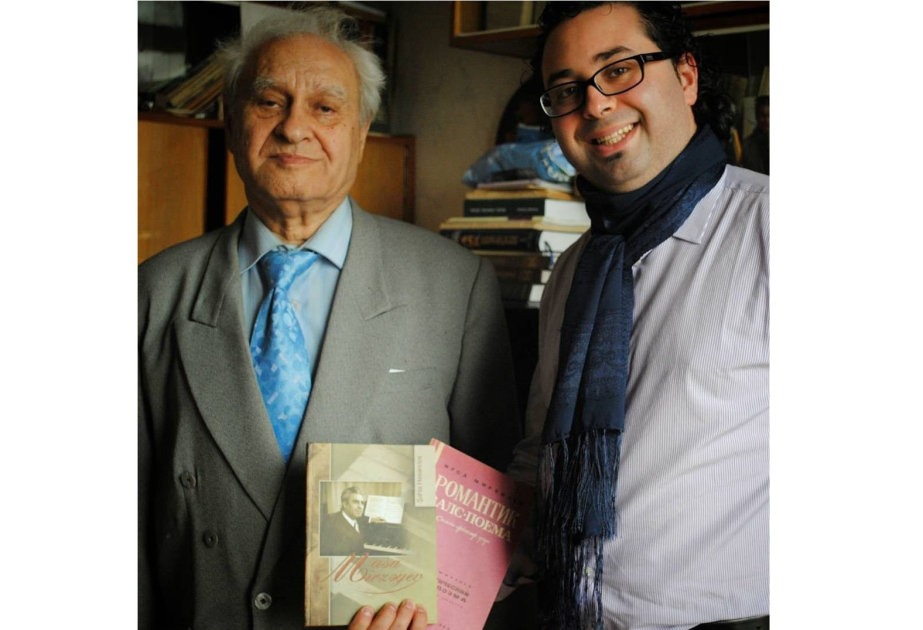
Another figure with whom I feel a deep connection is Musa Mirzayev.
In this case, our relationship extended far beyond professional admiration. I had the honor of knowing him personally, and we shared a relationship built on deep mutual respect.
For me, Musa Mirzayev was not merely a colleague, but a true master.
He belonged to a generation of composers for whom music was first and foremost an intellectual and moral responsibility, and only then a profession.
His pedagogical work made a significant contribution to the education of several generations of Azerbaijani musicians. I am convinced that his significance on the international music scene deserves further study and wider recognition.
His oeuvre is part of a great compositional tradition that, through Gara Garayev's school, is also linked to the musical heritage of Dmitri Shostakovich.
I firmly believe that Azerbaijan's musical heritage preserves the names of outstanding figures whose importance extends far beyond the country's borders. Musa Mirzayev is undoubtedly one of them.
It is precisely because of this deep artistic and personal bond with Musa Mirzayev that I am now organizing an important musical evening dedicated to his memory and artistic legacy, together with the Von Mai Foundation, which I have the honor of heading. The event will take place in Stuttgart on November 21.
It will provide a wonderful opportunity to pay tribute to his outstanding artistic and pedagogical legacy and to continue promoting Azerbaijani musical culture within the European cultural space.
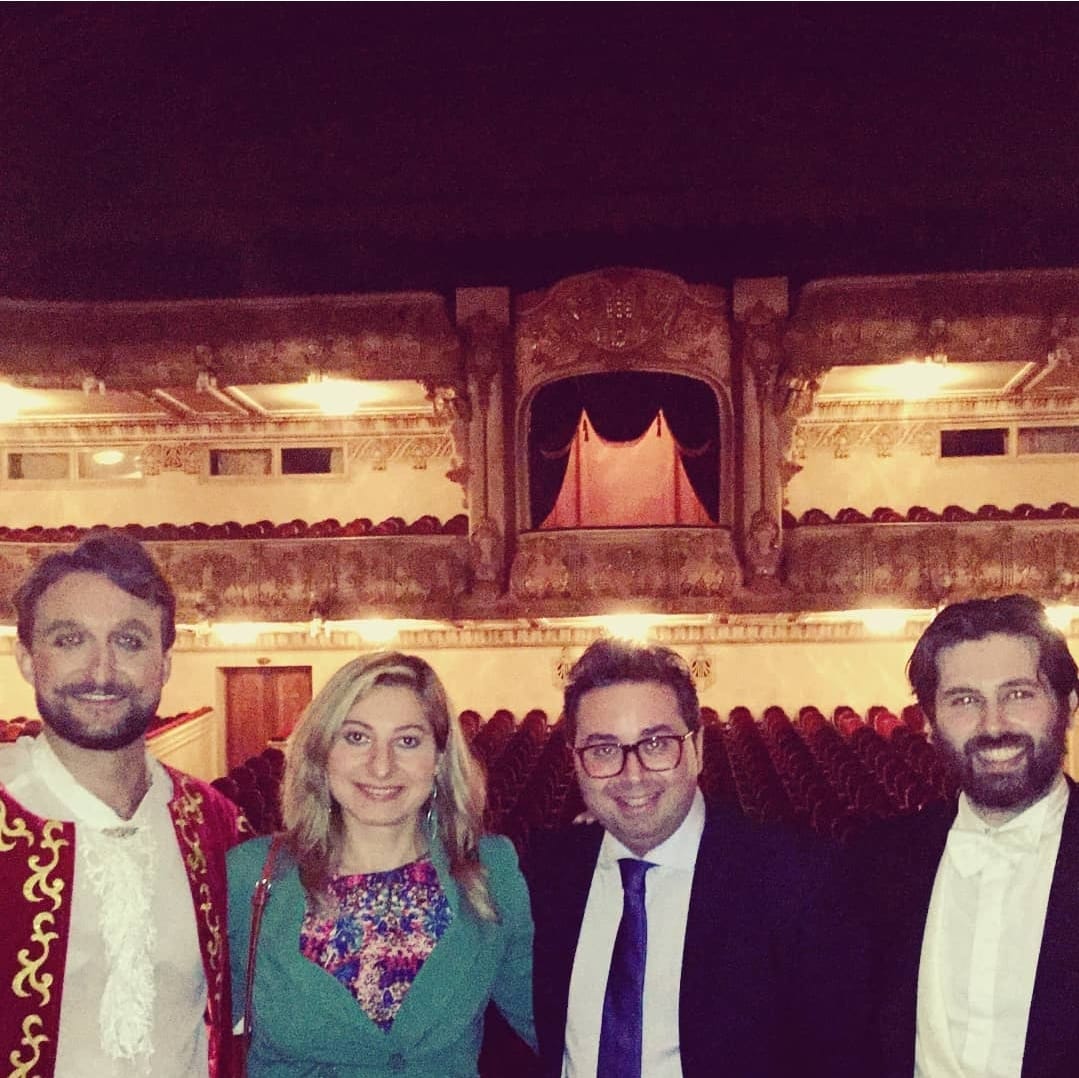
– As a composer, are you inspired by Azerbaijani music? Have you ever incorporated characteristic Azerbaijani motifs into your own works?
– Absolutely. I would go even further and say that the influence of Azerbaijani music on my compositional research has proved far deeper than might be apparent at first listen.
In 2013, I created a multimedia work inspired by the musical motifs of mugham. It was presented at the International Mugham Centre in Baku and subsequently in Florence, at Palazzo Medici Riccardi, as part of an artistic project that also featured the contemporary music ensemble Contempoartensemble, conducted by Maestro Vittorio Ceccanti.
This experience was particularly significant for me, as it marked one of my first concrete attempts to bridge my background in Western contemporary academic music with Azerbaijan's traditional musical heritage.
However, my aim has never been simply to reproduce melodies from another culture.
I am convinced that a composer must seek to understand what lies behind the musical material: its structure, expressive qualities, anthropological dimension, and, above all, spiritual meaning.
For this reason, what interests me about mugham is not only its modal system, but also the very principle of musical transformation—the ability to continually generate new expressive possibilities from an initial musical idea.
This concept is remarkably close to my own artistic poetics.
In the following years, I continued to develop projects designed to foster interaction between Italian and Azerbaijani musical traditions.
In particular, I recall the Baku Canta Napoli project, launched in 2015 as part of the cultural dialogue between Baku and Naples. Ten Italian composers took part, creating new arrangements of works from the Neapolitan musical repertoire.
For this project, I composed U mare e Napule, a piece dedicated to the Italian ambassador to Azerbaijan at the time. It was performed by the Azerbaijan State Orchestra under the direction of Fabrizio Festa.
This experience reinforced my conviction that musical cultures do not necessarily have to merge to engage in dialogue. Above all, they must learn to listen to one another.
Today, my artistic research also extends into the visual arts and philosophical reflections on metamorphosis. However, the core principle remains unchanged: to explore how one identity can be transformed through encounters with another without losing its own authenticity.
Other news in this section


